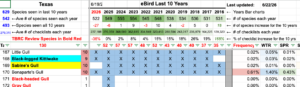
We are officially past the spring rush, which means it’s time to look into the numbers of the Texas Last 10 Years project. Out of the 493 total species recorded in the state over the last decade, two annual streaks are still up in the air for 2026. This is a quick look at which species are already secure and which ones will depend on someone finding a bird in the second half of the year.
Right now, our 2026 state total stands at 522 species. To give that some context, our rolling 10-year average is 542. Last year we finished strong at 549, and our peak for the last 10 years was just two years ago in 2024 at 555. We have some ground to make up in the second half of the year, but if you’re looking for specific things to keep an eye on, the individual species streaks are where it gets interesting.
Black-legged Kittiwake: Reaching the 10-Year Mark
- First, a quick update on the Black-legged Kittiwake. Coming into this year, it had a 9-year streak (2017–2025) after being missed in 2016. It has already made it onto the 2026 list, but barely. Thanks to a single mid-January sighting right on the Texas-Louisiana border at the Sabine Pass Battleground State Historic Site, it’s on track to maintain its presence in the data. When 2016 drops off the chart next year, the Kittiwake will officially have a perfect 10-year run in the project.
Sabine’s Gull (The Late Summer Annual)
- Next up is the Sabine’s Gull, which is sitting on a 10-year streak that hasn’t been logged yet for 2026. Because they usually don’t show up in Texas until late summer, missing that “X” on the list right now is completely expected. They typically turn up on inland reservoirs and coastal checkpoints right around August or sooner, maybe, so it’s worth keeping an eye out over the next couple of months to see if we can keep that trend going.
Varied Thrush (A Rare Ten-Year Regular)
- The other species with a 10-year streak currently missing its 2026 mark is the Varied Thrush. Because it’s a Review species, detections are obviously less frequent and usually depend on wintering birds showing up later in the year. But, if it is recorded this year, it will join the Golden-crowned Sparrow and Golden-crowned Warbler as the only Review species seen in all of the last 10 years. We’ll just have to wait until late fall or winter to see if anyone manages to find one and keep that trend intact.
That’s where the data stands at the mid-year mark. If you’re out birding over the next few months, keep these specific targets in mind. Thanks for your time, Good luck out there.